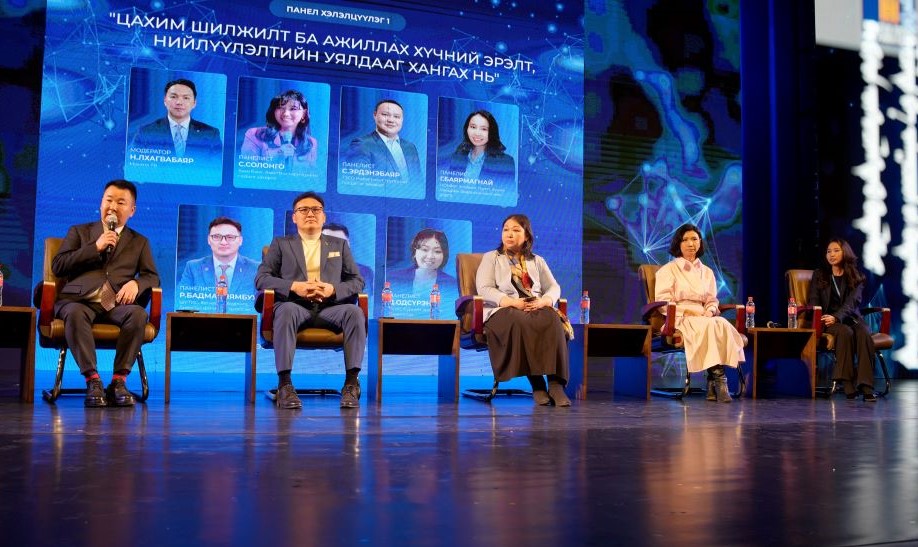
“Digital Transition and Youth Employment” National Forum Held
The Ministry of Family, Labour, and Social Protection of
Mongolia has declared 2026 as the Year of Employment Promotion.
Although young people make up a significant share of
Mongolia’s population, youth unemployment and economic inactivity remain relatively
high. To address these challenges, a national forum titled “Transforming
Labour: Digital Transition and Youth Employment” was organized in collaboration
with leading universities.
The forum provided a platform for exchanging ideas on how
young people can prepare for their careers, overcome employment challenges, and
effectively manage and utilize available opportunities. Discussions highlighted
that today’s youth increasingly prioritize workplace flexibility, remote work
options, work-life balance, a positive and psychologically healthy work
environment, and continuous learning and development over salary alone.
The ministry has also launched a new Youth Employment
Promotion Program, aimed at helping students and young graduates overcome the
common barrier of “lack of experience” when entering the workforce. The program
includes training in soft skills such as communication, teamwork,
problem-solving, and creative thinking, as well as support for turning
innovative ideas into businesses through financial and professional advisory
services.
As part of the forum, panel discussions were held on topics
including “Aligning Labour Supply and Demand in the Digital Transition”
and “Digital Transition and Youth Employment.” Participants also attended
sessions on “Artificial Intelligence and Workplace Challenges,” “Artificial
Intelligence and Opportunities,” and research findings on family-friendly
workplace policies. Short Pecha Kucha-style presentations offered practical
advice on identifying and developing skills and adapting to the evolving labour
market.
Speakers emphasized that rather than competing with
technology and artificial intelligence, it is crucial to leverage them to
create meaningful employment and sustainable income opportunities.
The event brought together more than 1,000 students from
major universities, including the National University of Mongolia, Mongolian
University of Science and Technology, Mongolian National University of
Education, Mongolian University of Life Sciences, Mongolian National University
of Arts and Culture, and Mongolian National University of Medical Sciences.