Mongolia Finalizes 11th Periodic Report under the Convention on the Elimination of All Forms of Discrimination against Women (CEDAW)
The Intersectoral
Working Group responsible for implementing the recommendations of Mongolia’s
10th periodic report under the United Nations Convention on the Elimination of
All Forms of Discrimination against Women (CEDAW) convened its regular meeting
on February 10, 2026.
The meeting was
opened by State Secretary Ms. L. Munkhzul of the Ministry of Family, Labour and
Social Protection. In her remarks, she emphasized that the participation of 45
representatives from 30 organizations reflects the broad scope and significance
of the CEDAW Convention. She noted that the Ministry has prioritized not only
the quality preparation of the 11th periodic report, but also strengthening the
understanding and capacity of working group members regarding the Convention’s
core principles.
She highlighted that
CEDAW is a comprehensive human rights treaty aimed at ensuring women’s equal
access to political and public life, including the right to vote and be
elected; establishing equality with men in education, healthcare, and
employment; protecting women from sexual exploitation and violence;
guaranteeing reproductive rights; and addressing family relations and gender
roles in a manner that respects national cultural and traditional contexts.
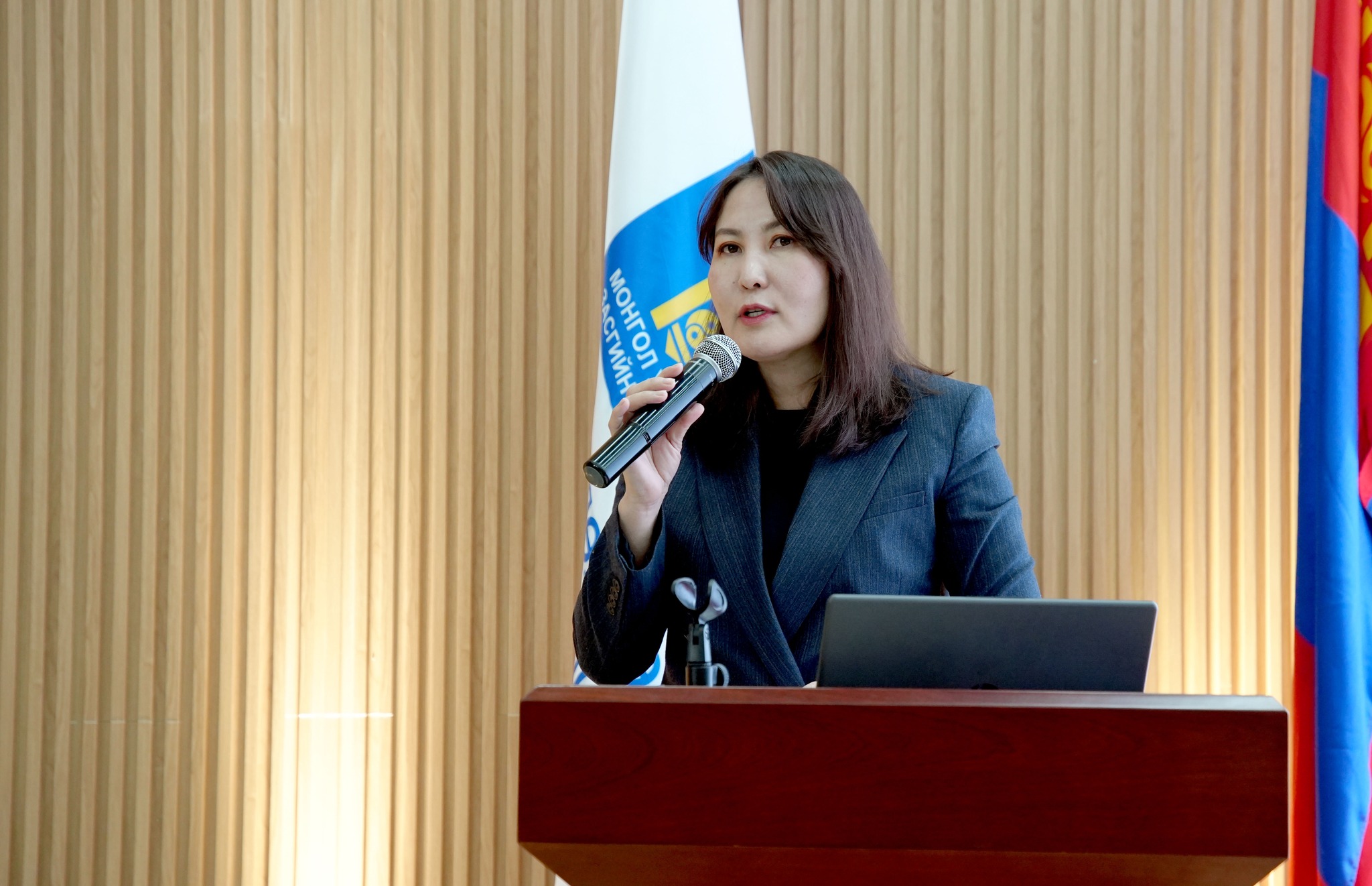
During the meeting,
Ms. M. Bolormaa, Head of the Women Leaders Foundation and consultant to the
report drafting process, delivered a presentation on key achievements and
priority issues identified during the reporting period of Mongolia’s 11th
periodic report. The presentation was followed by an active discussion, with
participants raising questions and providing comments.
The Ministry of
Family, Labour and Social Protection will finalize the 11th periodic report and
submit it to the Government for review in April–May 2026.
During the reporting period, significant institutional and legislative
reforms were undertaken. In Ulaanbaatar, the First Instance Court for Family
and Child Matters and the Appellate Court for Family and Child Matters were
established.
In the social protection sector, more than ten laws were developed or
revised, including:
·
the revised Law on the Rights of Persons with
Disabilities;
·
the revised Law on Social Welfare;
·
the revised Law on Employment Promotion;
·
the Law on Family Support;
·
the Law on Accessibility and Barrier-Free
Environment;
·
the Law on Sign Language, among others.
Compared to the pre-2020 period, these reforms have strengthened the legal
framework, enhanced human rights–based approaches, reduced discrimination, and
expanded equal opportunities for all.
Mongolia has also made progress in women’s political participation. As a
result of the 2024 regular parliamentary elections, 32 women were elected to
the State Great Khural. Furthermore, according to the Global Gender Gap Report,
Mongolia advanced by 20 places in 2025 compared to the previous year, ranking
65th overall.
These developments demonstrate Mongolia’s continued commitment to advancing
gender equality and fulfilling its obligations under CEDAW.