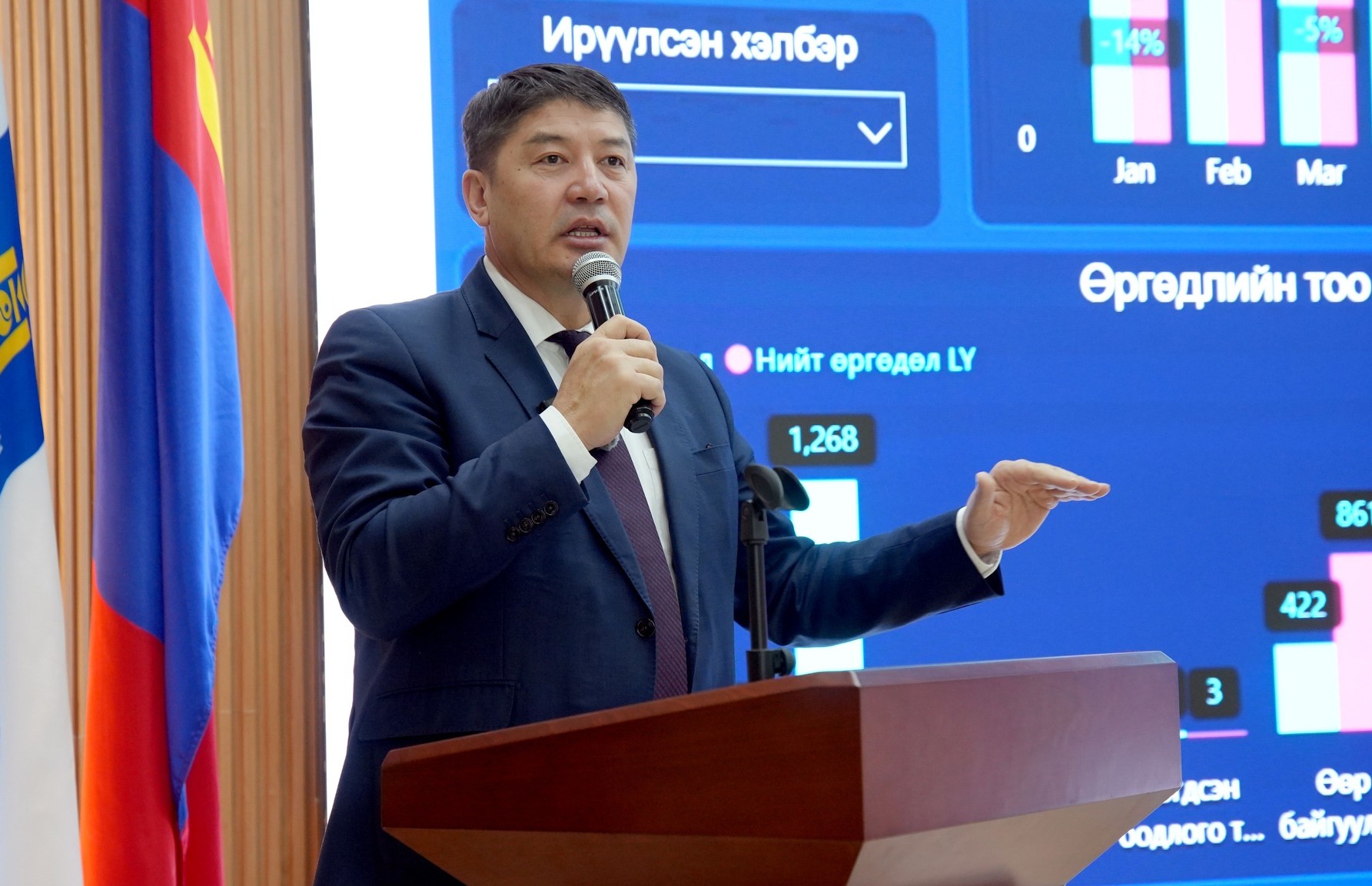
Social Well-Being Index to Increase by 20 Percent
The
Leadership Conference of the Family, Labour and Social Protection Sector was
held in Ulaanbaatar, bringing together 175 senior officials representing a
total of 4,893 public servants in the sector.
The
conference reviewed key policy measures implemented in 2025, the progress of
legal reforms, challenges and constraints faced by the sector, and priority
issues requiring further attention. Participants also engaged in practical,
results-oriented discussions on the sector’s medium-term development policy and
direction, as well as the goals and measures to be implemented in 2026.
Under
the Government of Mongolia’s 2024–2028 Action Program, the sector is
responsible for implementing 104 measures across 62 objectives. Of these, 100
measures began implementation in 2025, three will commence in 2026, and one in
2027.
Within
the “Five-Year Main Development Directions of Mongolia for 2026–2030,” ten
national outcome targets have been defined, three of which directly depend on
the performance and results of this sector. These include:
- Ensuring equal access for all
citizens to quality and accessible education and health services,
developing a workforce aligned with labour market demand, and increasing
the Human Development Index from 0.756 to 0.813;
- Improving the coherence of labour
relations, wages, and social insurance systems to promote decent
employment, calculating the share of the middle class for the first time,
and increasing it by 20 percent by 2030;
- Enhancing quality of life
through a healthy and safe living environment, accessible housing, and
quality social protection services; strengthening family stability;
advancing child development and protection to a new level; and calculating
and increasing the social well-being index by 20 percent over the next
five years. These outcomes have been approved by the State Great Khural.
The
conference emphasized that, to effectively implement the policy objectives and
measures set for 2026 and to achieve meaningful sectoral reform, unified
understanding, coordinated planning, strong leadership, and close cooperation among
senior officials at all levels are essential.
Minister
of Family, Labour and Social Protection Mr. T. Aubakir highlighted the
importance of ensuring that citizens are not merely recipients of services, but
active participants in decision-making processes that affect their lives able
to make choices and clearly articulate their needs and priorities. He also
underscored the need to develop an inclusive, simple, transparent, and
technology-based service ecosystem, enabling citizens to access services without
reliance on subjective assessments or discretionary decisions, and called on
sector leaders to prioritize these efforts.