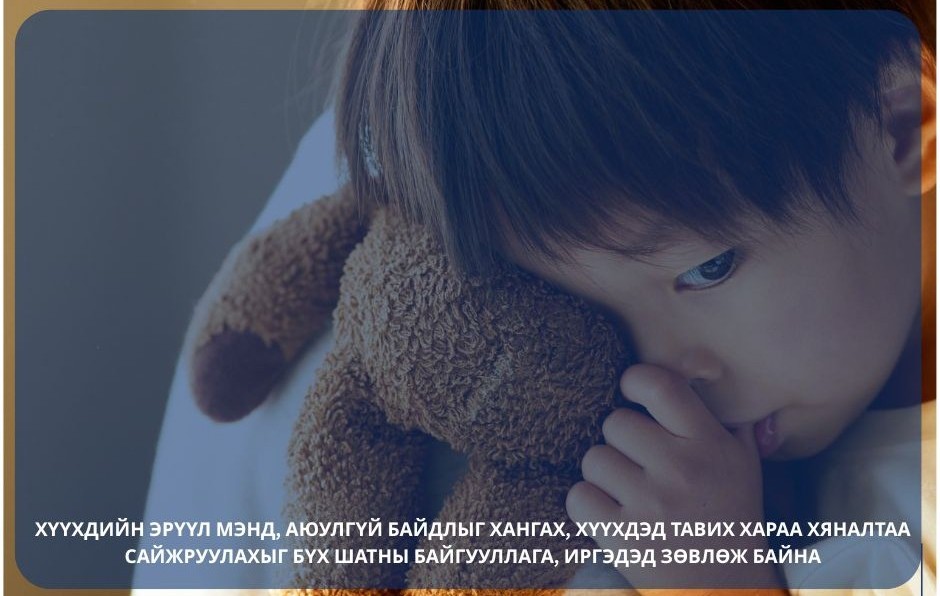
Ensuring Children’s Health and Safety: Guidance Issued to All Government Bodies and Citizens
As of today,
approximately 257,000 kindergarten-aged children and 826,800 students in
general education schools are enrolled nationwide. Due to the indefinite
teachers’ strike that began on 20 October 2025, it has become necessary to
strengthen child protection measures and ensure children’s safety by preventing
potential risks during this period.
Article 4.1.2 of the Law on the Rights of the Child states that “the State,
citizens, and legal entities shall prioritize the fundamental rights of children and ensure their right to
survival, development, protection, and participation in social life.”
Article 14.4 of the Law on Child Protection stipulates that “legal entities
shall carry out training, advocacy, and awareness-raising activities aimed at
preventing risks related to child protection,” and Article 30.3 obliges
government organizations to “support and implement child protection measures
within the scope of their legal responsibilities.”
Additionally, Article 43.3 of the Labour Law requires employers to “apply
flexible working arrangements and support employees in balancing work and
family life, reflecting child-friendly and child-protection policies in
collective agreements and internal regulations.”
Within the scope of
these legal obligations, ministries are advised to provide guidance to their
affiliated agencies; provincial and district governors are urged to direct all
local organizations to take measures that protect children, prevent risks, and
implement child-friendly decisions. Private sector entities are also encouraged
to follow these recommendations. The suggested measures include:
1. During the teachers’ strike, general
education schools and kindergartens must share information on at-risk children
with provincial and district Child and Family Development and Protection
Departments. Agencies should intensify child protection efforts and take all
possible measures to ensure children’s rights and safety.
2. Provincial and district governors
should closely monitor high-risk environments, vulnerable households, and
children’s safety. They must actively coordinate the work of multidisciplinary
teams, community inspectors, and patrol officers, ensuring effective reporting,
rapid information flow, and timely interventions.
3. Where necessary, and without
disrupting normal organizational operations, public and private sector
employers are urged to:
·Allow one parent or guardian of children aged 12
and under to work remotely or flexibly;
·Allow parents of children aged 0–5 (including
single parents) to work remotely;
· Apply flexible working hours and reasonable
work-shift arrangements;
· Ensure that all decisions are consistent with
child-friendly and child-protection principles.
4. All public and private organizations
are requested to issue guidance and awareness messages for parents and
guardians on ensuring children’s health and safety, strengthening supervision,
assessing risks in the home and surrounding environment, and eliminating
identified hazards.