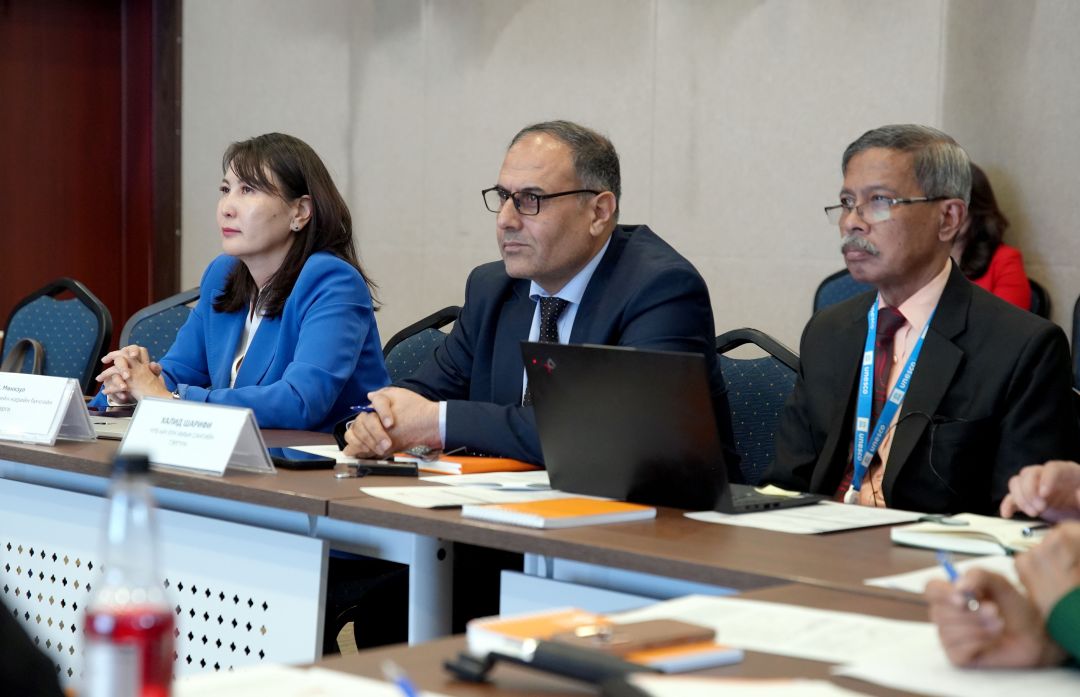
“Human-Centred Development: Sustainable Population Policy for the Gobi Region” Developed
The Ministry of Family Labour and Social Protection, in
cooperation with the United Nations Population Fund (UNFPA) in Mongolia, has
developed and presented for discussion a policy paper titled “Human-Centred
Development: Sustainable Population Policy for the Gobi Region,” based
on comprehensive demographic research.
The discussion was attended by chairpersons and governors of
aimag citizens’ representative councils from the Gobi region, representatives
of relevant ministries and agencies, embassies, international development
partners, and civil society organizations.
In 2024, the Government of Mongolia revised and approved the
“Regional Development Concept of Mongolia,” designating seven economic
development regions—Khangaï, Northern, Gobi, Central, Eastern, Western, and
Ulaanbaatar—each with its own development priorities.
Within this framework, the Gobi region is to be developed as
a “diversified industrial zone and sub-region for green energy,” making
the implementation of a demographic strategy for the region particularly
important.
In recent years, the Gobi region has experienced slowed
population growth and declining fertility rates, indicating the need to
strengthen family planning support and improve access to reproductive health
services.
Patterns and structures of internal migration also vary
across the region. For example, in Ömnögovi aimag, internal migration is
dominated by male labour, whereas in Dundgovi aimag, female migration is more
pronounced. The study suggests that implementing policies aimed at climate
adaptation and creating new livelihood opportunities can help reduce migration
pressures in the region.
Since the comprehensive population policy for the Gobi
region spans multiple sectors—including health, education, employment,
infrastructure, mining, and the environment—participants emphasized that
integrating this policy into the medium-term development programs of aimags,
under the concept of “Human-Centred Regional Development,” will be crucial for
effective implementation.